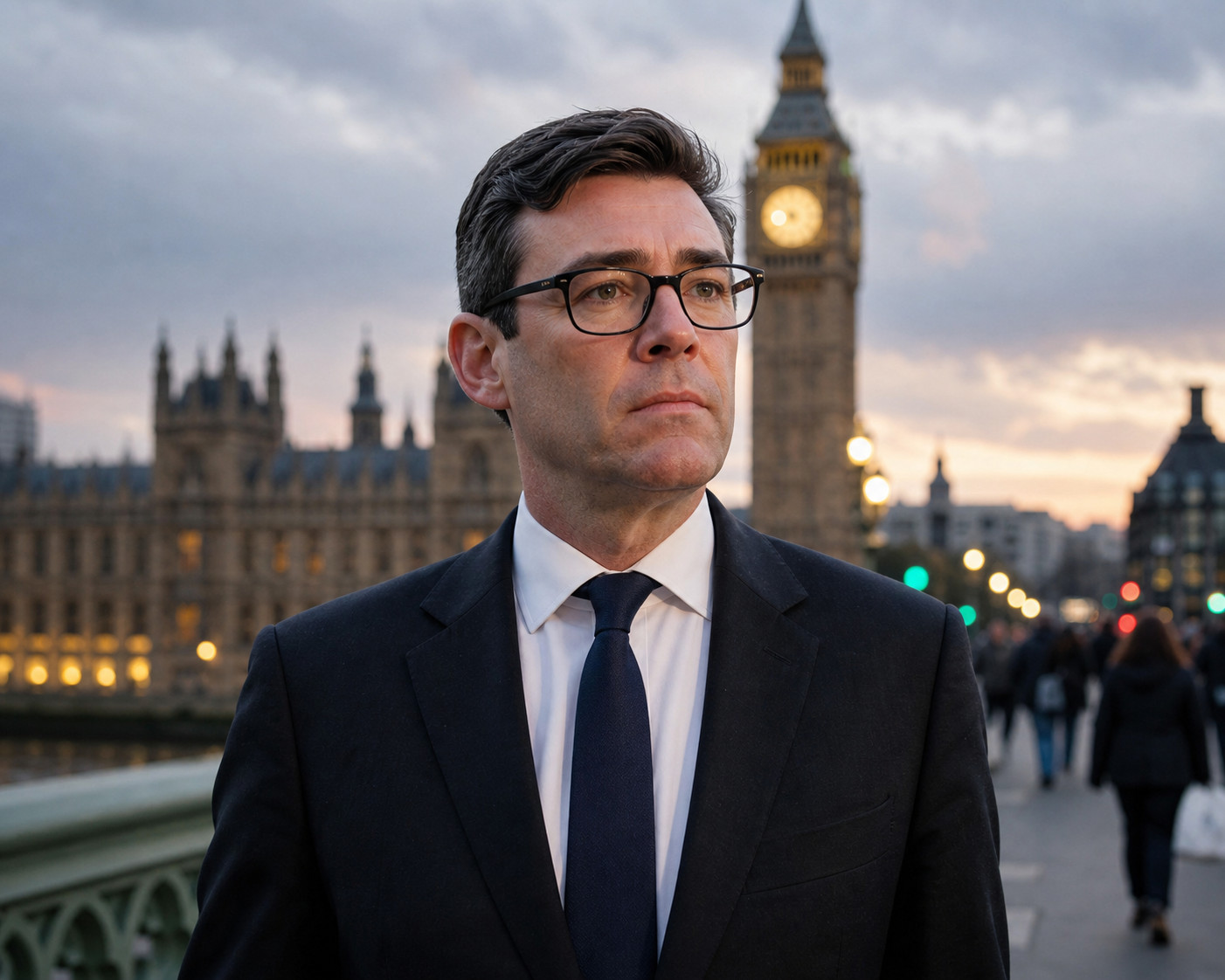
Andy Burnham has put the possibility of Britain rejoining the European Union back into the centre of national politics, saying his government will set out options ranging from the present settlement to full membership around a planned UK-EU summit. The newly elected prime minister’s intervention at Labour’s Liverpool conference, followed by BBC interviews, is the sharpest break yet with the position on which Labour fought the 2024 election. The party had explicitly ruled out returning to the single market or customs union and restoring freedom of movement.
Burnham now says those choices, alongside remaining outside the bloc, must be assessed.
“Brexit has done more harm than good,” Burnham told the conference, adding that Britain could “go all the way” to full EU membership. That is not a timetable for an application to Brussels, nor a commitment to a referendum. Burnham said ministers would examine what is feasible and weigh the pros and cons of each route.
But the change matters because it moves re-entry from an argument conducted largely by campaign groups into the vocabulary of government. For a decade, Brexit’s defenders and critics have argued over whether departure was permanent in practice as well as law. Burnham’s formulation accepts neither premise.
The status quo remains one option, he says; so do a customs union, single-market participation and membership. The government’s coming presentation will show whether that breadth survives contact with policy, Parliament and European conditions.
A public mood moving ahead of Westminster
The prime minister is moving as polling suggests a sizeable appetite for a closer relationship. A Messina Group survey of 11,461 people, conducted from September 12 to 24, found 49% supported rejoining the EU and 28.5% opposed it. Rejoining was the most popular of seven options tested.
The same polling found that renegotiating the relationship with the EU could add as much as seven points to Labour’s vote share. A separate YouGov megapoll for Best for Britain, covering nearly 12,000 adults in Great Britain, found full membership was the most popular EU policy option in every parliamentary constituency except four Reform UK-held seats. Nationally, 35% selected membership as their preferred policy.
Those figures do not settle the constitutional question. Poll wording, campaign intensity and the eventual terms of any proposal would matter greatly. They do, however, weaken the old political assumption that reopening the European question necessarily carries only electoral risk for Labour.
Burnham’s shift also has a practical logic. A customs union would address tariffs and rules of origin in goods trade, while single-market participation would entail deeper regulatory alignment. Full membership would be a more profound undertaking still.
Each model would carry different obligations, bargaining costs and domestic political consequences.
Brussels offers a welcome, with conditions
Europe’s early response has been warmer than the years of post-Brexit rancour might have suggested. Emmanuel Macron, speaking in Madrid, greeted Burnham’s suggestion in English: “Welcome back.” The French president said a British return would be good news for Britain and for Europeans. Macron attached a clear condition.
Britain could not return by selecting only the elements of EU membership it preferred.
“You cannot choose between the freedoms of the union, nor can you decide to take what suits you and leave the rest,” Macron said. “So, come back.”
Spain’s prime minister, Pedro Sánchez, said his country would open its arms to a British bid. Yet the warmth from Paris and Madrid should not be mistaken for a blank cheque.
Burnham is proposing an examination of options, while EU leaders are signalling that any eventual return would be judged against the union’s rules, not against the exceptional arrangements Britain once negotiated. That tension is the heart of the new debate. Britain may find that the closer it wants to move towards European markets and institutions, the less scope it has to preserve the bespoke distance promised by Brexit.
The immediate test will be whether Burnham can turn a broad declaration into a coherent account of trade-offs. He has opened a door that successive British governments kept shut. What lies beyond it is not a reversal delivered by rhetoric, but a long argument over sovereignty, economic ties and the price of belonging.