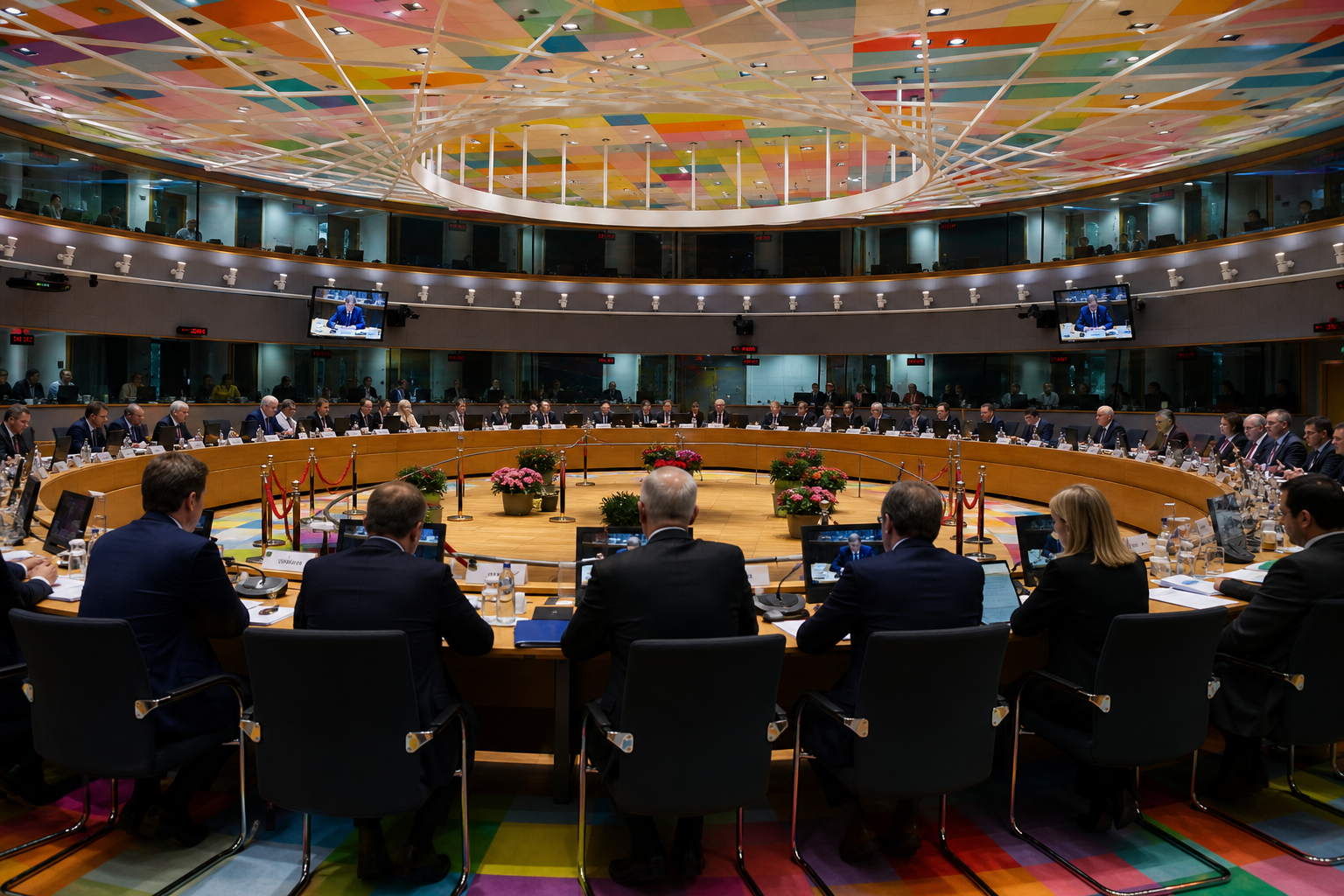
The European Union moved closer on Friday to creating an optional company form meant to work across the bloc, but the Council’s agreement is a mandate for negotiations — not the birth of a new legal regime. Under the Council’s position, a founder could choose the proposed “EU Inc” framework rather than one of the 27 national company-law systems, register online within two days for no more than €100, and operate across the single market. For startups trying to raise venture capital or issue shares across borders, that would replace part of a costly patchwork of national procedures with a common rulebook.
The promise is substantial. The Commission’s March proposal was designed for companies that can spend weeks or months navigating incorporation, capital increases, share transfers and local formalities. It envisaged a digital-by-default structure, including online formation, digital corporate records and procedures intended to make investment rounds less dependent on national paperwork.
But the text agreed by ministers on October 23, under Ireland’s Council presidency, also shows the limits of an effort to make company law genuinely European. National governments preserved wider room to police registrations, apply local worker-participation rules and delay implementation. They also cut back elements that made the original proposal more attractive to fast-growing firms.
A corporate passport, with national checkpoints The Council’s position retains the headline offer: an optional 28th regime beside, rather than above, national company forms. Existing businesses would not have to convert, and founders would still choose where to register their EU Inc. That matters because the EU’s corporate landscape remains fragmented. The Commission has said the bloc has more than 60 company forms across its 27 legal systems. Its impact assessment identified divergent rules on incorporation, share transfers, investor entry and employee equity as a source of legal uncertainty, cost and delay for startups seeking to expand beyond their home market.
“This is a measure that will make a real and practical difference to start-ups and SMEs looking to scale up across the EU,” Micheál Martin, Ireland’s Taoiseach, said after the Council agreement. The Council did not accept that speed should override national safeguards. Its mandate permits national authorities to refuse registration under their own law on grounds linked to money laundering, terrorist financing or other criminal activity.
Those checks answer a legitimate concern: a fully online vehicle must not become an easier route for illicit companies. Yet their practical design will determine whether a two-day incorporation target is a dependable service or merely an aspiration subject to 27 national gatekeepers. The Council also gives member states 21 months, rather than the Commission’s proposed 12, to put the system into effect.
That extra time may be needed to connect business registries and build screening processes. It also pushes the prize further from the founders whom Brussels says it wants to keep in Europe.
The missing pieces of a single rulebook
The most consequential compromises concern the parts of corporate life that begin after incorporation. The Commission’s proposal covered a company’s lifecycle, including simplified insolvency procedures for eligible innovative startups. The Council’s compromise drops that insolvency chapter, leaving failing EU Inc companies to confront national winding-up regimes.
A two-day launch is useful; a cross-border company form is less complete if its exit still runs through markedly different national systems. The mandate retains an EU employee stock-option scheme, under which taxation would be deferred until employees dispose of shares. But it limits the scheme to small mid-caps — companies with up to 750 employees and €150 million in annual turnover.
That preserves a potentially useful recruitment tool for younger firms, while excluding companies just as they become large enough to compete internationally for engineers and executives. Employee participation remains another fault line. The principal rules would follow the country where an EU Inc has its registered office.
But where a company crosses worker-participation thresholds in another member state, the Council proposes an optional mechanism through which that country can enforce its own requirements. That formula is an attempt to prevent a company from choosing a lighter governance regime while employing most of its workforce elsewhere. It may also recreate some of the legal uncertainty EU Inc was designed to remove.
Luca Enriques, Casimiro Nigro and Tobias Tröger, writing in an October SAFE working paper on the earlier Council compromise, warned that broad reliance on mandatory national rules could leave an EU Inc governed by 27 versions of the law. Friday’s vote underscored the political difficulty. Malta and Slovakia voted against the mandate, while Finland and Hungary abstained.
The European Parliament’s legal affairs committee has yet to settle its own position, with employee participation among the issues delaying its work. The Council decision therefore opens, rather than concludes, the decisive phase. Ireland wants an agreement with Parliament by year-end.