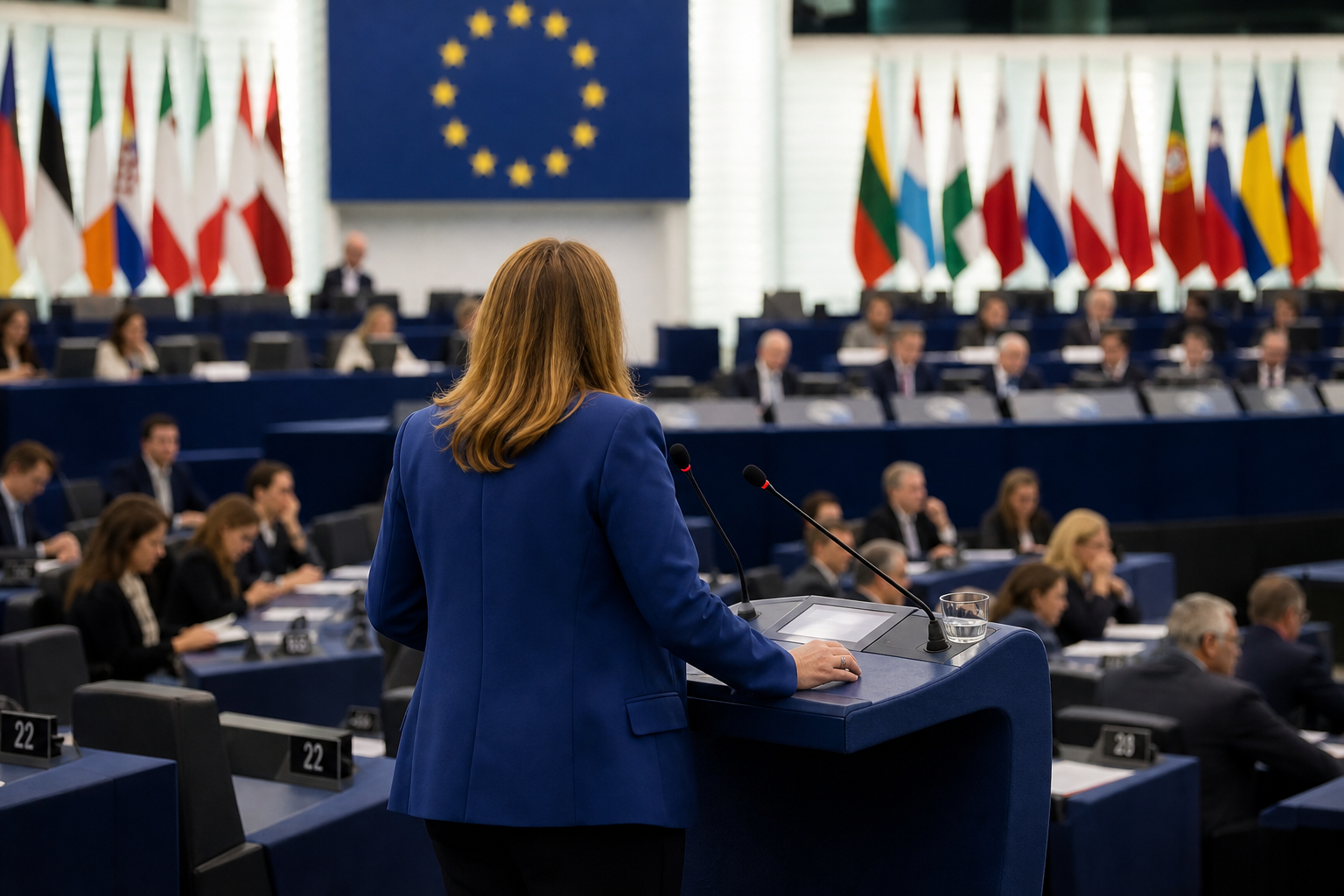
European lawmakers are exploring whether EU product-liability rules should reach the developers of the most capable artificial intelligence models, a move that could sharpen Europe’s regulatory confrontation with major US technology companies. The effort is framed as an answer to a perceived gap between the EU’s AI rulebook and the question of who pays when an advanced system causes harm. The political stakes are high: a liability regime that reaches the makers of frontier models could alter how the largest developers design, document, release and insure their systems for the European market.
Liability moves to the centre of the
AI debate The immediate question is not simply whether artificial intelligence should be regulated. The EU has already built a far-reaching framework for AI. The emerging dispute concerns a harder issue: when an AI system contributes to damage, can an injured party realistically prove what went wrong, and can responsibility reach beyond the company that deployed the system to the company that developed its underlying model?
That distinction matters especially for powerful general-purpose models that may be incorporated into many products and services. A model developer can sit several steps away from the final user, while the system itself may be adapted, fine-tuned or combined with other software before it reaches the public. Lawmakers considering tougher rules are seeking to make that chain of responsibility less opaque.
Their argument is likely to turn on the difficulty of identifying failures in complex systems, accessing technical evidence and establishing causation after a harmful outcome. For companies, however, the same approach could raise difficult questions about where responsibility begins and ends. Developers may argue that they cannot be held accountable for every later use of a model, particularly where another business controls the data, instructions, safeguards and final deployment.
A test for
Europe’s existing framework The debate sits alongside two separate but connected European legal projects: the AI Act and the revised Product Liability Directive. The first establishes obligations around AI systems; the second concerns compensation for damage caused by defective products. Treating them as interchangeable would obscure the political and legal significance of the latest push.
The AI Act is designed to impose duties before harm occurs, including requirements that vary according to the risks posed by a system. Product-liability rules operate differently. They address what happens after damage is alleged, including which party may face a claim and what a claimant must show.
European lawmakers are therefore examining whether existing liability concepts can cope with systems whose decisions may be difficult to explain and whose development and deployment are divided among several companies. Any new amendment or interpretative approach will be judged on the details: which models are covered, what type of damage triggers a claim, and whether the burden of proof changes for injured parties. Those details will also determine whether the rules are narrowly aimed at the most advanced systems or become a wider framework affecting developers across the AI market.
Transatlantic consequences The dispute has an obvious international dimension.
Many of the companies developing the best-known advanced AI models are based in the United States, even as they sell services, build partnerships and attract customers across Europe. A European liability regime that reaches model developers could become a major commercial and diplomatic issue. It could affect contractual arrangements between model makers and European customers, reshape insurance and compliance costs, and encourage companies to reconsider how they distribute or provide access to their most capable systems in the EU.
It may also expose a divergence in regulatory philosophy. European policymakers have generally sought to combine market access with detailed obligations aimed at protecting safety and fundamental rights. The United States has taken a more fragmented approach, leaving important questions to a mix of sectoral rules, agency action, litigation and voluntary commitments.
That difference does not automatically produce a legal conflict. But it raises the prospect of friction over jurisdiction, the treatment of foreign companies and the compatibility of strict European requirements with international trade commitments.
The unresolved lines
Much remains unsettled. Lawmakers will have to decide how to define a frontier model without creating rules so broad that they cover ordinary software, or so narrow that they miss the systems the initiative is intended to address. They will also need to confront a central technical distinction: the difference between closed models controlled by a single developer and models released with varying degrees of openness.
Liability rules that assume a developer retains control may be harder to apply where models are modified or distributed by others. The political test will be whether the EU can create a credible route to compensation without imposing unlimited responsibility on companies far removed from an alleged harm.