On 17 September, a Vectus Global team travelling with Congolese soldiers in South Kivu was ambushed. About 20 people were killed or wounded, Reuters reported on 9 October, citing more than 10 sources. The casualties included at least seven Congolese troops, three gunshot wounds to the leg of the former Green Beret and UFC fighter Tim Kennedy, and the death of Justin Conaglen, a former New Zealand Special Air Service soldier identified by The New York Times and the New Zealand Herald.
The firefight put a human toll on a venture that had begun with a more bureaucratic promise: help the Democratic Republic of Congo collect taxes from its mineral wealth and curb smuggling. In less than two years, according to Reuters and United Nations investigators, Erik Prince’s Congo operation had acquired drones, foreign former soldiers and a role alongside the Congolese army on a front reshaped by the M23 rebellion.
A tax contract gains a military arm Reuters first
reported on 17 April 2025 that Prince had reached an agreement with Congo’s finance ministry to help secure and tax mineral revenues. Sources then said there were no plans to send security personnel to the front. The UN Group of Experts’ final report, published on 11 June 2026, described a broader arrangement.
It said a Prince-linked, UAE-based entity signed a five-year contract in December 2024, then registered a Congolese subsidiary in June 2025 which in turn registered Vectus Global. The finance-ministry agreement included a “mining brigade,” the experts said. But the UN report also described a covert military component: border-security work along the Rwandan and Zambian frontiers, strategic advice for the Congolese armed forces, aircraft purchases and the recruitment of former foreign soldiers.
Vectus staff told the experts that the centre of gravity had shifted from revenue collection to security. The report said contractors helped coordinate artillery and drone strikes in South Kivu, and that special forces were airdropped near Minembwe in February 2026. Christophe Sirot, identified by the UN as Vectus’s coordinator, denied that the company had a military role.
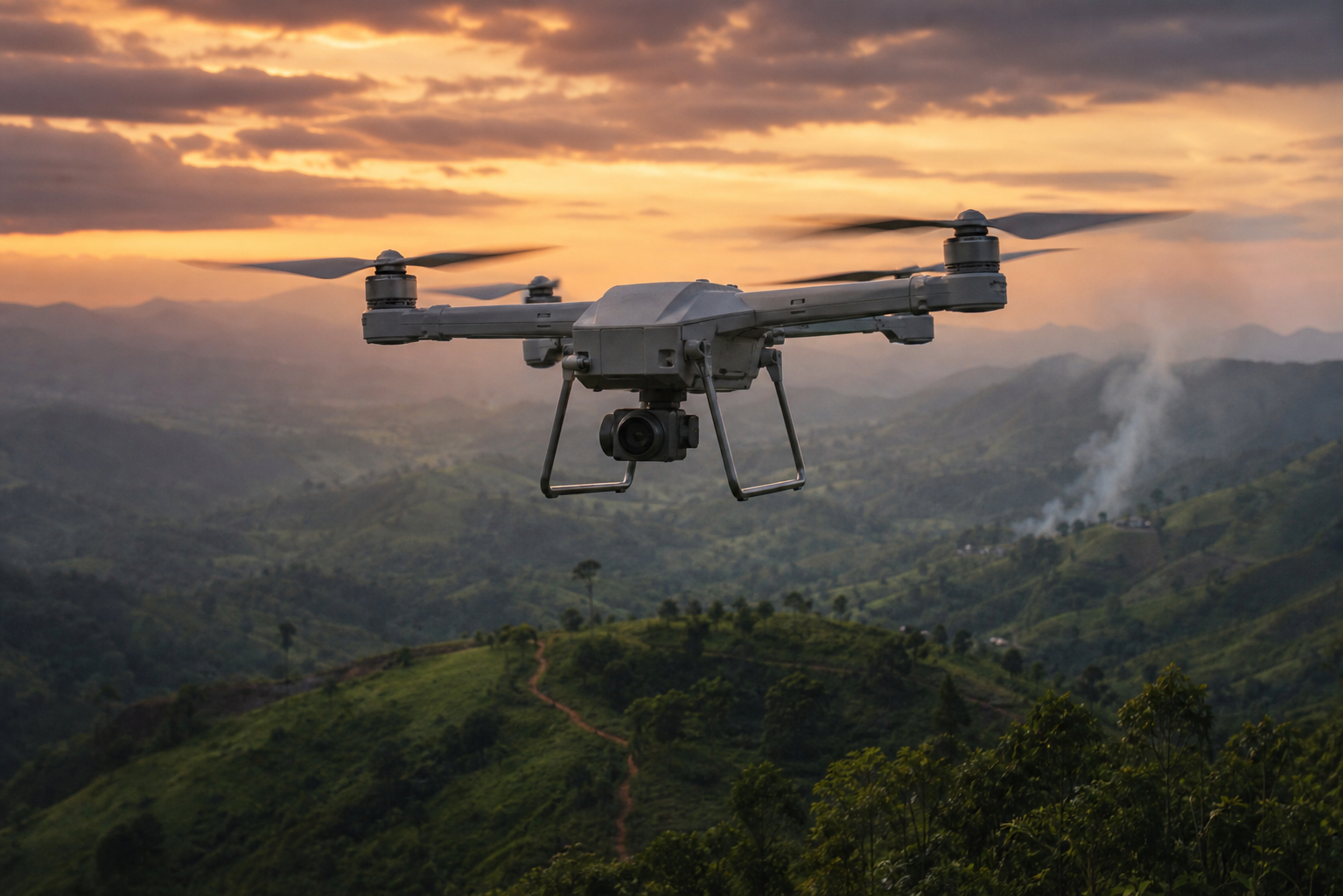
Drones in a war Washington wants settled Reuters reported on 10 February that Prince had deployed a private force to operate drones and assist Congolese troops defending Uvira, alongside Israeli contractors. It was described as his first known frontline role in the conflict. Uvira had become a measure of the war’s volatility. The UN experts said M23 captured the city on 10 December 2025 and withdrew on 18 January 2026 after US pressure. The same UN report said Rwanda exercised command and control over M23 and deployed more than 8,000 troops for the Uvira offensive; Rwanda denies backing the group and points instead to the continued presence of the FDLR, which the experts said still fought alongside Congolese forces. The 17 September ambush shows the exposure created when private contractors travel and operate with a national army. A Congolese government source told Reuters that Rwandan forces may have tracked a surveillance drone to the Vectus team. Two Reuters sources attributed the attack to the Rwandan military, but Congo, Rwanda and M23 did not respond to the agency’s requests for comment, and responsibility has not been officially confirmed.
“No military solution to the conflict in eastern DRC,” a US State Department spokesperson told the New Zealand Herald in September. That position sits awkwardly beside the growing commercial security presence. The State Department told the Herald it had no contracts with Prince in Congo.
The Washington Accords, signed by Presidents Félix Tshisekedi and Paul Kagame on 4 December 2025, were a US-backed bilateral framework; M23 was not a party, with its negotiations running on a Qatar-led track.
The next contracts remain unclear The New
York Times reported on 9 October that Vectus contractors were based at Kalemie airfield on Lake Tanganyika, and that Prince was negotiating a possible $200 million contract to protect Congolese air-force assets. It also reported that several Colombian contractors had been killed in a separate battle in early September. Africa Intelligence reported on 8 October that Prince had secured a $65 million contract related to maintenance of army aircraft, after talks with Kinshasa over technical and logistical support for the armed forces, particularly aviation.
The full terms, scope and status of that reported deal have not been publicly established. The Times described the evacuation after the September ambush as a “long ordeal,” citing a person close to Prince, who said it had been made worse by a lack of Congolese support. Vectus declined to comment to Reuters on the incident.
Online claims have raced ahead of the reporting. Posts on X alleging contracts worth nearly $700 million, a planned December counteroffensive, or verified footage of Vectus “mercenaries” have not been independently substantiated.