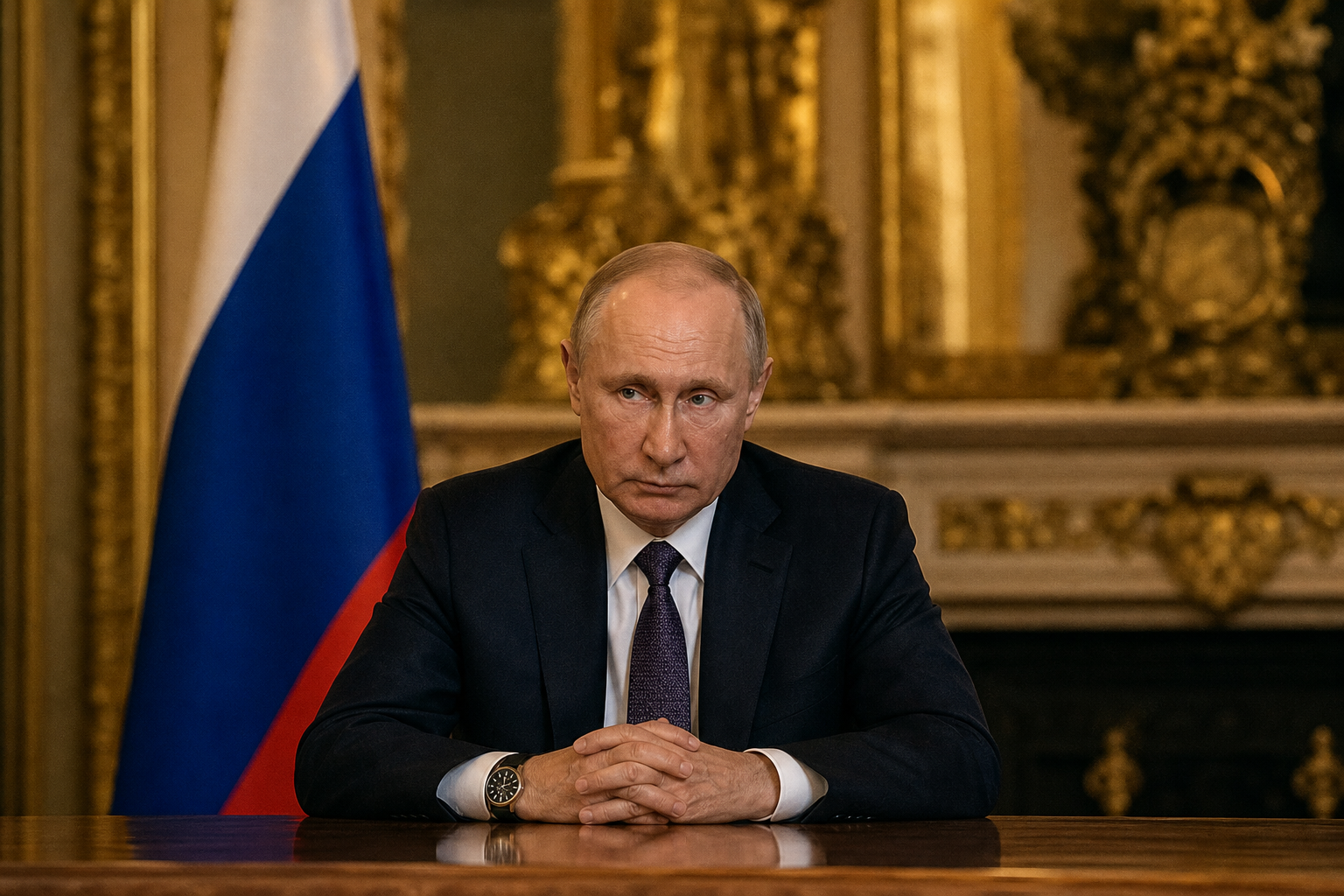
Russia has said that Modi and Xi offered to help bring the war in Ukraine to an end, with Putin welcoming the prospect of a BRICS role. After years of war, even an undeveloped diplomatic opening carries weight. The discussion now also comes as the parties are considering not attacking energy infrastructure, a limited but potentially consequential area of restraint within a conflict that has continued to shape Europe’s security.
If the apparent offers develop into a defined initiative, they would place a grouping better known for political and economic weight at the centre of Europe’s most consequential security crisis. For now, however, Moscow’s statement signals a possible opening rather than a negotiated process. No mediation framework, timetable or account of the warring sides’ positions has been established in the available account.
Nor is it clear how discussion of refraining from attacks on energy infrastructure would relate to any wider effort to end the war. Yet Moscow’s decision to link Ukraine directly to BRICS is significant in itself.
A Diplomatic Signal From Moscow
Putin’s welcome is less evidence of an imminent settlement than an indication of the diplomatic partners Russia wishes to foreground. Moscow has repeatedly sought to show that it is not isolated beyond the Western coalition supporting Ukraine. A possible role for Modi and Xi would reinforce that argument, while presenting BRICS as a forum capable of addressing questions beyond trade, development and representation in global institutions.
The language leaves fundamental questions unanswered. Helping to end a war can mean encouraging direct talks, carrying messages between capitals, proposing principles for a ceasefire or supporting a broader political settlement. It may also, in this case, include seeking restraint over attacks on energy infrastructure.
Each possibility has different implications for Ukraine, European governments and Russia’s partners. The immediate test will be whether the offers are followed by public proposals, direct engagement with Kyiv or a clearer explanation of what Moscow believes mediation should involve. Without those elements, the development remains principally a diplomatic expression of interest.
Europe’s Stake in a Long War
For Europe, the relevance is direct. Any effort to advance an end to a war that has endured for years would affect debate across the continent over military support, sanctions, reconstruction and the terms on which a future peace might be built. Discussion of not attacking energy infrastructure adds another practical dimension, because energy has become part of the war’s wider consequences.
Europe is not merely an observer of a possible mediation drive. The outcome of the war will shape its security environment for years, and European governments will judge any initiative against Ukraine’s interests and choices, as well as their own assessment of regional stability. A process lacking Ukrainian participation, or seeking to resolve core questions without Kyiv’s consent, would face an immediate political problem whatever support it attracted elsewhere.
That is why the difference between a Russian welcome and a mutually accepted diplomatic track is essential. Moscow can endorse outside involvement. It cannot alone create a process capable of ending the conflict, or establish whether restraint over energy infrastructure can be maintained.
A credible effort would need to show that all relevant parties are prepared to engage, identify the issues on the table and establish whether any arrangement can endure.
BRICS and the Politics of Influence
The reference to BRICS gives the announcement a wider meaning. The group has become an important vehicle for countries seeking a greater voice outside institutions traditionally dominated by Western powers. A role in Ukraine diplomacy would be a far larger test of that ambition.
It would also expose the limits of shared branding. BRICS members may agree that the group should exert greater influence, but influence in a war depends on more than a summit or a statement of principle. It depends on access to the parties, clarity of purpose and the ability to persuade them to accept difficult compromises.
Modi and Xi would bring distinct political weight to any such effort. Their involvement, however, would not automatically turn an offer of assistance into a single BRICS position, nor would it resolve the central disagreement over what a just and durable end to the war should look like. The prospect of restraint over energy infrastructure does not answer those wider questions; it underscores the distance between a limited understanding and a settlement.
From Offer to Process
The next phase will show whether this is a substantive diplomatic development or a moment of positioning. Officials would need to clarify whether Modi and Xi acted independently, whether they envisaged coordinated work and whether BRICS as a body is expected to assume any formal role. Just as important will be the response beyond Moscow.
Ukraine’s view is indispensable to any serious assessment of the proposal. So too is the reaction in European capitals, where officials will look for signs that mediation could reduce violence without creating a settlement that stores up further instability. The discussion of not attacking energy infrastructure may point to a narrower area in which restraint is being considered, but it does not by itself constitute a route out of a war that has already endured for years.
Putin’s welcome has created a new diplomatic question, not supplied an answer. Modi and Xi may broaden the conversation around Ukraine; whether that conversation becomes a process remains unresolved.